

Replacing a roof, updating siding, or installing new windows should feel like a straightforward home improvement—until you remember the HOA. In many North Georgia communities, exterior changes are governed by architectural standards designed to protect property values and keep the neighborhood’s look consistent. The challenge is that “consistent” can mean different things depending on your covenants, your Architectural Review Committee (ARC), and even the phase of your subdivision. If you start work without approval, you can end up with stop-work orders, fines, or the expensive requirement to undo what you just installed.
This guide walks you through what to expect when seeking HOA approval in North Georgia for roofing, siding, and window projects. You’ll learn how HOAs typically evaluate exterior changes, what to include in a strong application, how to avoid common delays, and how to handle special situations like storm damage or urgent repairs. Whether you’re planning a cosmetic upgrade or responding to a leak after a heavy Georgia storm, the goal is the same: get approved faster, reduce risk, and move your project forward with confidence.
How HOA approval works in North Georgia (and why it matters)
Most HOAs in North Georgia operate under recorded governing documents—typically Covenants, Conditions & Restrictions (CC&Rs), bylaws, rules and regulations, and a set of architectural guidelines. These documents empower an Architectural Review Committee (ARC) or Architectural Control Committee (ACC) to review exterior changes. While the exact process varies, the intent is usually to preserve a cohesive appearance and prevent modifications that could reduce neighboring property values.
In practice, that means exterior projects like roof replacements, siding changes, and window replacements almost always require prior written approval. Even if you’re “just replacing what’s there,” the HOA may still require an application to confirm the materials, color, profile, and visible details match the community standards. Many HOAs also require that contractors be licensed and insured, and that work complies with local building codes and permitting rules.
Approval timelines can range from a few days to several weeks. Some ARC committees meet monthly, while others review applications on a rolling basis. If your submission is incomplete—missing a color sample, manufacturer spec sheet, or photos—the clock may effectively restart once you provide the missing information. This is one of the biggest reasons homeowners feel stuck: the work is ready to schedule, but the paperwork isn’t.
It’s also important to understand that HOA approval is separate from city or county permitting. In North Georgia, you may need permits depending on the scope of work and local requirements. For example, window replacements that alter opening sizes or structural elements may trigger permitting, and certain roofing projects may require inspections. The HOA can require its own approval regardless of whether the county requires a permit—and the county can require a permit regardless of whether the HOA approves. You typically need both when applicable.
Finally, HOAs often have enforcement mechanisms that can create real financial consequences. These may include daily fines, suspension of amenities, lien rights, and legal action. The most expensive outcome isn’t the fine—it’s being required to remove non-compliant materials and reinstall approved ones. For high-cost exterior projects, the safest approach is simple: treat HOA approval as a project milestone, not an afterthought.
What HOAs usually look for in exterior projects
While every community is different, ARC reviews often focus on visible uniformity. For roofs, that may include shingle type, color family, architectural vs. 3-tab profile, and ridge vent appearance. For siding, they may consider material type (fiber cement vs. vinyl), board exposure, trim profiles, and paint color. For windows, they often review frame color, grid pattern, window style (double-hung vs. casement), and reflectivity or tint.
HOAs also commonly assess whether the change is “in harmony” with surrounding homes. Even if your preferred option is attractive, it may be denied if it’s considered out of character for your street or phase. This is why looking at precedent—what has been approved nearby—is a powerful strategy.
Roof projects: materials, colors, and common HOA restrictions
Roof replacements are among the most heavily regulated exterior projects because they’re highly visible and have a major impact on curb appeal. In North Georgia, many HOAs specify acceptable shingle manufacturers, shingle types (often architectural shingles), and approved color palettes. Some communities also limit roofing upgrades like metal roofs, synthetic slate, or specialty designer shingles unless the neighborhood already has an established precedent.
One common point of confusion is whether a “like-for-like” roof replacement requires approval. Many HOAs still require an application even if you’re replacing an aging roof with the same color and shingle type. The HOA’s view is that they need documentation for their records and confirmation that the final product will match the community standard. If you skip approval because you assume it’s identical, you can still be cited.
Another frequent issue is color interpretation. The difference between “charcoal,” “weathered wood,” and “driftwood” can be subtle on a sample but dramatic across an entire roof plane in bright sunlight. HOAs may prefer certain undertones (cool vs. warm) so the neighborhood doesn’t drift into a patchwork of mismatched roofs. If your community has a limited list of approved colors, stick to it unless you’re prepared to build a strong case for an exception.
Ventilation, flashing, and visible roof components can also become HOA topics. While HOAs typically don’t regulate code-required details, they may care about the appearance of ridge vents, turbine vents, solar tubes, skylights, and drip edge colors. If you’re adding new roof penetrations or changing the look of vents, include those details in your application. It’s much easier to get approval upfront than to explain after the fact why a new row of vents appeared.
Timing matters, too. North Georgia weather can be unpredictable, and storm seasons can create contractor backlogs. If your HOA takes 30 days to review and your contractor’s schedule is tight, you’ll want to submit early—often before you finalize the installation date. A good rule of thumb is to secure HOA approval before placing material orders, especially if the materials are special-order and non-returnable.
Practical example: avoiding a roof color denial
Imagine a homeowner in a Dawson County neighborhood chooses a “black” architectural shingle because it looks sharp on the sample board. The HOA guidelines, however, specify “charcoal/gray tones only” to match the stone and paint palette used throughout the community. Under sunlight, the “black” reads as a deep ink tone that makes the home stand out from surrounding roofs. The ARC denies the request, and the homeowner loses time after already putting down a deposit.
A better approach would be to submit two acceptable color options from the start—both within the HOA palette—along with photos of nearby approved roofs. If the ARC is split on one option, they can approve the alternate without sending you back to square one.
Actionable roof approval tips
- Use manufacturer spec sheets: Include the exact shingle line, color name, and product code.
- Submit a roof photo mockup: Many contractors can provide a simple visualization showing your roof color on your home.
- Document “like-for-like”: Provide a current roof photo and state that the replacement matches profile and color family.
- Clarify visible accessories: Note ridge vent type, drip edge color, and any skylights or new vents.
- Ask about storm exceptions: Some HOAs have expedited processes for insurance-driven replacements.
Siding projects: matching community style while upgrading performance
Siding changes can transform a home’s appearance and improve durability, but they also raise more architectural questions than many homeowners expect. HOAs often regulate siding material, style, texture, and color. In North Georgia, you’ll commonly see rules that encourage traditional lap siding, board-and-batten accents, or fiber cement products, while restricting highly reflective vinyl or unconventional panel styles.
If you’re replacing damaged siding, the HOA may require that you match the existing siding type and exposure (the amount of board visible after overlap). Even small differences can be noticeable. For example, switching from 6-inch exposure lap siding to 5-inch exposure changes the scale of the facade. Similarly, changing from smooth to wood-grain texture can alter the look enough to trigger a denial if the community has a consistent finish.
Color approvals are often the biggest sticking point. Many HOAs maintain an approved paint palette or require that siding and trim colors complement neighboring homes. Some communities limit the number of similar colors per street to avoid a “cookie-cutter” effect in the wrong direction—too many identical homes in a row. If your HOA uses a “color wheel” approach, you may need to provide your proposed color along with the adjacent homes’ colors and confirm you’re not duplicating a nearby scheme.
Another common consideration is trim and accent details. If you’re updating siding, you may also want to update corner boards, fascia, soffits, shutters, or stone veneer accents. HOAs may require that these elements remain consistent with the neighborhood style (for example, certain trim widths or approved shutter styles). If your project includes multiple exterior components, it’s usually better to submit one comprehensive application rather than piecemeal requests that could conflict.
Finally, siding projects often intersect with water management and building science—especially in humid climates. If you’re upgrading to fiber cement, adding a rain screen, or improving flashing details, those are typically positive changes. The key is to keep the HOA focused on appearance while still documenting any visible differences. If the rain screen creates thicker trim returns or changes the depth at windows, note it in your plan so the ARC isn’t surprised by the final look.
Practical example: a partial siding replacement that triggers a mismatch
Consider a homeowner in a Forsyth County HOA who replaces only the most weathered elevation with new siding. The new boards have a slightly different texture and exposure, and the paint—though “the same color”—is fresh and reads brighter than the older sides. Neighbors complain, and the HOA asks for documentation showing that the replacement matches the original approved material. The homeowner now has to either repaint the entire home or replace additional siding to achieve a consistent look.
A more HOA-friendly approach would be to submit a plan that includes: (1) the exact siding product for the replacement, (2) confirmation of matching exposure and texture, and (3) a repaint scope that ensures color consistency across all elevations. Even if you only replace one side, repainting the full exterior often prevents a “patchwork” appearance that draws attention.
Actionable siding approval tips
- Bring samples to the process: If allowed, provide a physical siding sample or high-resolution product images.
- Specify exposure and texture: List the reveal (e.g., 5″ or 6″) and whether it’s smooth or wood-grain.
- Include a color plan: Siding, trim, shutters, doors—show the full palette to reduce back-and-forth.
- Address partial replacements: Explain how you’ll ensure the finished exterior looks uniform.
- Confirm restrictions on vinyl: Some HOAs allow vinyl only on rear elevations or prohibit it entirely.
Window projects: style consistency, frame colors, and energy upgrades
Window replacements are often driven by comfort, energy efficiency, and maintenance concerns, but HOAs typically view them through an architectural lens. In many North Georgia neighborhoods, windows contribute heavily to the home’s “face,” and even small changes—like removing grids or switching frame colors—can noticeably alter the facade. As a result, HOAs frequently require ARC approval for any window replacement that changes visible characteristics.
One of the most common HOA requirements is maintaining the original window style. If your home was built with double-hung windows, switching to casement windows might be denied even if the new windows are higher quality. Similarly, changing the grid pattern (for example, from colonial grids to no grids) can be a deal-breaker in communities with a consistent traditional look. Some HOAs allow grid removal only on rear elevations or only if a certain percentage of neighboring homes have already been approved for the same change.
Frame color is another frequent issue. White frames are common, but some communities require bronze, black, or a specific neutral that matches trim. If you’re considering dark-framed windows for a modern look, verify whether your HOA permits it. Even if the community allows black windows, they may require consistent application (all front-facing windows) to avoid a mixed appearance. Also note that “black” varies by manufacturer—some read as charcoal, others as true black—so provide the exact color name and product line.
Reflectivity and glass appearance can also come up. HOAs may restrict mirrored or highly reflective glass, and some may have rules about visible tint. While most modern low-E glass doesn’t look mirrored, certain coatings can appear more reflective depending on lighting. If your community is sensitive to this, ask your window contractor for documentation on exterior reflectance and provide it with your application.
Lastly, window replacements often happen in phases due to cost. HOAs may allow phased replacements, but they may require that all windows visible from the street match during the project. If you replace half the front windows now and half next year, slight differences in frame profile or grid thickness can be noticeable. When planning phases, choose a product line that will remain available and document the exact specifications so you can match later.
Practical example: grid changes and “front elevation” rules
A homeowner in a Hall County community wants to remove grids for a cleaner look and better views. The HOA guidelines require grids on all front-facing windows but allow gridless windows on the rear elevation. If the homeowner submits a single application to remove all grids, it’s likely to be denied.
A more strategic approach would be to submit a plan that keeps grids on the front elevation while proposing gridless windows on the rear, accompanied by photos showing that the change won’t be visible from the street. This often results in partial approval, allowing the homeowner to upgrade performance and aesthetics where it won’t disrupt the neighborhood’s architectural consistency.
Actionable window approval tips
- Match the style: Confirm the operating type (double-hung, single-hung, casement) and keep it consistent where required.
- Document grids: Provide grid pattern diagrams (e.g., 6-over-6) and whether grids are between-the-glass or simulated divided light.
- Specify frame color and finish: Include manufacturer color name and whether it’s matte, satin, or gloss.
- Address visibility: Note which elevations are street-facing and include photos from the curb.
- Plan for phases: If replacing in stages, state your timeline and confirm all street-facing windows will match.
Submitting a strong HOA application: documents, timelines, and communication
The fastest approvals usually come from the most complete submissions. HOAs are often run by volunteers or property managers handling many requests, and they rely on clear documentation to make decisions. A strong application reduces uncertainty: it shows exactly what you’re changing, what it will look like, and how it aligns with the community’s standards.
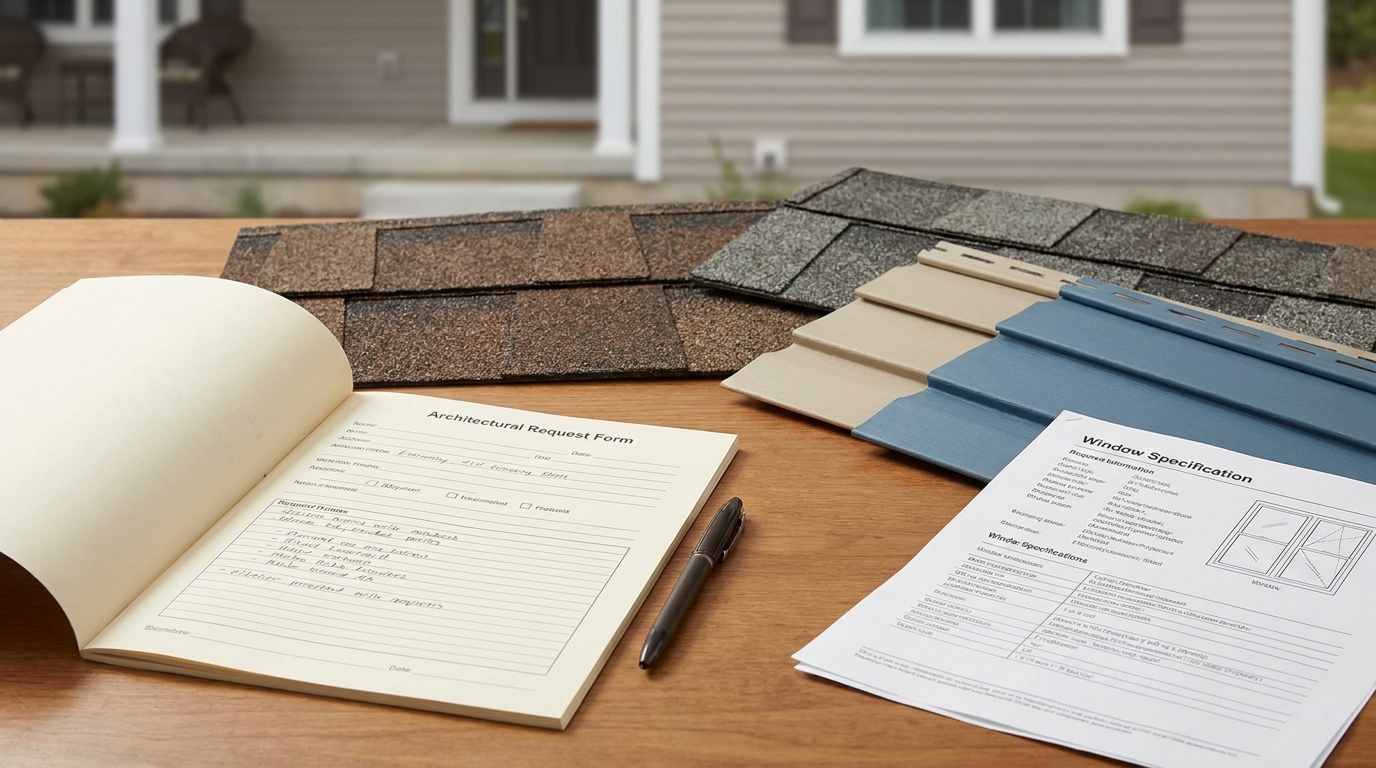
Start by finding the right documents and forms. Many North Georgia HOAs have an ARC request form, and some require specific attachments like a site plan, elevation drawings, or color samples. If your HOA uses an online portal, follow the upload instructions carefully and label files clearly (for example: “Roof_SpecSheet_GAF_TimberlineHDZ_Charcoal.pdf” rather than “scan123.pdf”). If submissions are emailed, combine documents into a single PDF when possible to avoid missing attachments.
Next, build your application around what the ARC needs to approve. For roofing, that’s typically shingle type and color plus any visible accessories. For siding, it’s material, profile, exposure, and color scheme. For windows, it’s style, grid pattern, and frame color. Include manufacturer links or spec sheets, but don’t rely on links alone—web pages can change. PDFs and screenshots are more reliable for review and recordkeeping.
Communication also matters. Be courteous, concise, and proactive. If your project is time-sensitive—such as active leaks or storm damage—say so and ask whether an expedited review is available. If you’ve spoken with the property manager or an ARC member, reference that conversation and summarize what was discussed. The goal is to make it easy for the committee to say “yes” without needing multiple rounds of clarification.
Finally, track the timeline and get approvals in writing. Many HOAs have defined review periods (for example, 30 days). If the HOA fails to respond within the stated period, some documents treat the request as approved by default, while others do not. Don’t assume—verify your governing documents. Keep copies of your submission, confirmation emails, and the final approval letter. If a dispute arises later (for example, a new board questions an older approval), your documentation can protect you.
What to include in a complete exterior project package
- ARC request form filled out completely, signed, and dated
- Scope of work in plain language (what’s being replaced, added, or changed)
- Contractor information (company name, license if applicable, insurance certificate if required)
- Manufacturer specifications (product line, color name, model numbers)
- Color samples or official color chips (digital or physical per HOA rules)
- Photos of your home from the street and close-ups of the existing materials
- Marked-up visuals showing where changes occur (simple annotations are fine)
- Neighbor/precedent references (optional but helpful: addresses or photos of similar approved projects)
Timeline tip: work backward from your ideal install date
If your contractor can start in four weeks but your HOA meets once a month, you may need to submit immediately—or you may miss the review window and wait another month. A practical planning method is to work backward: identify the earliest HOA decision date, then schedule contractor start dates only after you have written approval and any required permits.
Special situations: storm damage, emergencies, and disputes
North Georgia weather can create urgent exterior needs—wind-lifted shingles, hail impacts, fallen limbs, and water intrusion. In these cases, homeowners often ask: “Do I really need HOA approval if my roof is leaking?” The answer is nuanced. Most HOAs allow emergency measures to prevent further damage, like tarping a roof or replacing a broken window temporarily. However, permanent repairs or full replacements typically still require approval, even when insurance is involved.
If you’re dealing with storm damage, document everything. Take photos of the damage, keep copies of insurance communications, and ask your contractor for a written assessment. Then contact your property manager or ARC immediately to ask about emergency procedures. Some HOAs have expedited reviews for insurance claims, and some allow you to proceed with “like-for-like” replacements if you submit documentation within a certain timeframe. The key is to communicate early and keep the HOA in the loop.
Disputes can arise when homeowners feel a denial is unfair or inconsistent. If your request is denied, ask for the specific guideline that applies and what changes would make the application approvable. Many denials are not permanent “no” decisions—they’re requests for modification. If you believe the HOA is applying rules inconsistently, gather evidence of precedent: photos, addresses, and (if available) prior approvals. Present your case respectfully and in writing, focusing on objective alignment with the standards rather than personal preference.
Another special situation is when you buy a home with existing non-compliant exterior changes. You might discover that windows were replaced without approval years ago, or siding was updated in a way that doesn’t match current guidelines. HOAs may still enforce compliance, even if the work predates your ownership, depending on the documents and enforcement history. If you suspect this, consult the HOA records if possible and address issues proactively before starting new exterior work that could draw attention.
Finally, consider how contractor choices affect HOA outcomes. A contractor experienced in HOA communities can often help you select compliant materials, provide clean documentation, and avoid installation details that trigger complaints (like leaving debris visible, blocking sidewalks, or storing materials in prohibited areas). If your HOA has rules about work hours, dumpster placement, or signage, include those in your project plan to prevent avoidable violations.
Actionable steps when you need urgent repairs
- Stabilize first: Use temporary measures (tarping, temporary boarding) to prevent further damage.
- Notify the HOA quickly: Email the property manager/ARC with photos and a brief description of the situation.
- Ask about expedited review: Provide insurance claim details and contractor assessment if available.
- Stay “like-for-like” when possible: Emergency situations are not the best time to introduce major aesthetic changes.
- Get written confirmation: Even for emergency exceptions, request written guidance on what is permitted.
Conclusion: get approval faster and protect your investment
HOA approval for roof, siding, and window projects in North Georgia isn’t just a formality—it’s a safeguard for neighborhood standards and, when handled well, a way to protect your own investment. The most successful projects start with understanding the rules, selecting materials that align with community guidelines, and submitting a complete, easy-to-review application that answers the ARC’s questions upfront.
Key takeaways: read your architectural guidelines early, document exactly what you plan to install, and include manufacturer specs, color information, and clear photos. For roofs, pay close attention to shingle type, color families, and visible accessories. For siding, focus on material, exposure, texture, and a cohesive color plan. For windows, maintain style consistency, confirm grid requirements, and specify frame color and reflectivity considerations.
If you’re facing storm damage or urgent repairs, communicate quickly, document thoroughly, and ask about expedited or emergency procedures—while remembering that permanent replacements usually still require written approval. And if you run into a denial, treat it as a problem-solving process: request clarification, adjust the plan, and use neighborhood precedent to support your case.
When you approach HOA approval as a critical step in your project timeline—not a hurdle at the last minute—you reduce delays, avoid costly rework, and keep your exterior upgrades moving smoothly from planning to installation.