
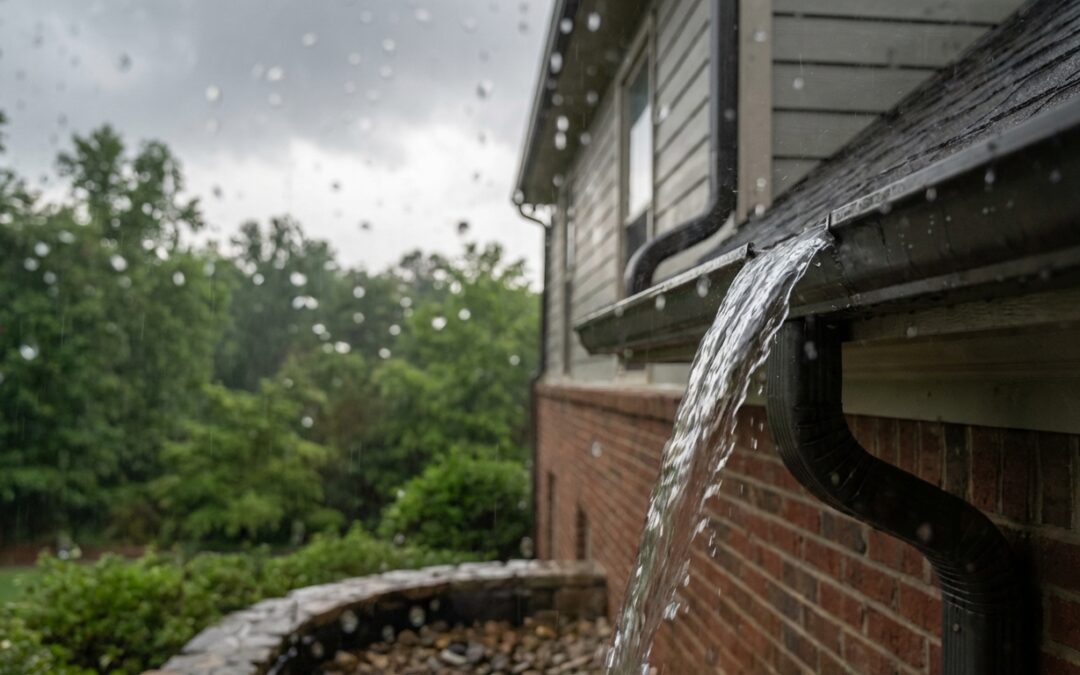
Georgia’s weather can feel like a study in extremes: long humid stretches, sudden thunderstorm downpours, and seasonal bursts of heavy rain that can overwhelm a home’s drainage in minutes. When gutters can’t keep up, the consequences show up fast—overflowing water sheets off the roofline, soil erodes around the foundation, mulch washes away, basement walls dampen, and fascia boards begin to rot. Choosing the right gutter system in Georgia isn’t just a curb-appeal decision; it’s a practical investment in protecting your roof, siding, landscaping, and foundation from repeated water exposure.
The good news is that you don’t need to guess. With a clear understanding of Georgia’s rainfall patterns, your roof size and pitch, your home’s layout, and the most common failure points (clogs, undersized gutters, poor slope, and weak downspout strategy), you can select a gutter system that reliably handles the flow. This guide breaks down what matters most—gutter size, style, materials, downspout planning, and add-ons like gutter guards—so you can make a confident, long-term choice.
1) Understanding Georgia’s Rainfall and Why Gutters Fail
Georgia averages a healthy amount of annual rainfall, but what challenges gutters most is not just the total—it’s intensity. In many areas, storms can dump a large volume of water in a short time, especially during spring and summer thunderstorms. When rain intensity spikes, an undersized or poorly designed gutter system can’t move water away quickly enough, leading to overflow at the eaves and concentrated dumping near the foundation.
Gutters often “fail” in predictable ways. Sometimes the system is the wrong size for the roof area. Other times, the gutters are fine but the downspouts are too few, too small, or discharge too close to the house. In Georgia’s tree-heavy neighborhoods, clogs from pine needles, oak leaves, and seed pods can turn a properly sized system into a waterfall during the next storm.
Another common issue is installation quality. Even premium gutters won’t perform if they’re hung with inadequate pitch, if seams are poorly sealed, or if hangers are spaced too far apart and allow sagging. In heavy rain, a sagging run becomes a low spot where water pools, debris collects, and overflow begins. Over time, standing water accelerates corrosion in metal systems and contributes to fascia deterioration.
Finally, Georgia’s heat and humidity can amplify the damage from chronic overflow. Persistent dampness can invite wood rot, paint failure, mold growth, and insect activity around soffits and fascia. If you’ve ever noticed peeling paint at the roofline, dark streaks on siding, or muddy splash patterns near the foundation after storms, your gutter system is sending a clear signal that it needs a sizing or design upgrade.
Real-world example: the “one downspout” problem
A common setup on older homes is a long gutter run on the back of the house with only one downspout at the far end. In light rain, it works. In a Georgia downpour, water rushes to the outlet faster than it can drain, backing up and spilling over the edge. Homeowners often assume they need “bigger gutters,” but the smarter fix may be adding a second downspout (or upsizing the outlet) to increase drainage capacity where it’s needed most.
2) Sizing Your System: 5-Inch vs. 6-Inch Gutters (and Beyond)
Gutter sizing is where performance starts. Most homes have either 5-inch or 6-inch K-style gutters, and the difference is more than an inch. A 6-inch gutter can move significantly more water and is often the safer choice for Georgia homes with larger roof planes, steeper pitches, or areas that see frequent intense storms.
As a rule of thumb, 5-inch gutters can be sufficient for smaller roof areas and simpler rooflines—especially if downspouts are properly placed and kept clear. But if you’ve experienced overflow during heavy rain, if your roof has long uninterrupted runs, or if your home sits under heavy tree cover, 6-inch gutters provide a bigger margin of safety.
Downspouts are just as important as the gutter itself. A wide gutter paired with undersized downspouts can still bottleneck. Many systems use 2×3-inch downspouts by default, but 3×4-inch downspouts move more water and are often recommended for higher-volume drainage. The goal is to create a balanced system: adequate collection (gutter size) plus adequate discharge (downspout size and quantity).
Roof pitch also affects sizing. A steeper roof sheds water faster, effectively increasing the flow rate into the gutter during storms. Two homes with the same roof area can have different gutter needs if one has a much steeper pitch. In Georgia, where intense storms are common, that extra flow rate can be the difference between stable drainage and frequent overflow.
Actionable sizing checklist
- Choose 6-inch gutters if you have a large roof, steep pitch, frequent overflow, or long gutter runs.
- Upgrade to 3×4 downspouts if water backs up at outlets or you see overflowing near downspout locations.
- Add downspouts on long runs to reduce the distance water must travel to drain.
- Prioritize problem areas: valleys, roof sections that feed large volumes into one gutter, and corners where water concentrates.
Practical tip: don’t guess—observe during a storm
If it’s safe to do so, watch your gutters during a heavy rain. Look for overflow points, areas where water shoots past the gutter edge, or sections where water seems to “stand” instead of moving toward an outlet. These observations are often more useful than assumptions, and they can guide targeted upgrades like an extra downspout or a larger outlet at a chronic bottleneck.
3) Choosing the Right Gutter Style for Georgia Homes
Gutter style affects both performance and appearance. The two most common residential styles are K-style and half-round. K-style gutters are popular because they hold more water for their size and blend well with modern and traditional architecture. Half-round gutters have a classic look and can shed debris differently, but they typically hold less water than a comparable K-style system.
For Georgia’s rainfall, capacity matters. That’s why many homeowners and contractors prefer K-style gutters, especially in 6-inch sizes. Their shape allows for higher volume, and they tend to handle intense rain better when paired with adequate downspouts. They also mount in a way that can be robust against sagging when properly supported with quality hangers.
Half-round gutters can still work well in Georgia, particularly on historic or custom homes where aesthetics are a priority. They can be easier to clean in some cases because of their smooth interior, but they may require more careful sizing and downspout planning to handle heavy downpours. If you choose half-round, it’s especially important to avoid undersizing and to ensure the downspouts are designed for peak flow.
Box gutters and custom profiles sometimes appear on higher-end builds or commercial-style homes. These can be engineered for high capacity, but they also require experienced installation and careful waterproofing. The more custom the system, the more you want an installer who understands local rainfall patterns, roof drainage dynamics, and long-term maintenance realities.
Seamless vs. sectional: a major performance decision
Seamless gutters are formed on-site from a continuous piece of material, with seams primarily at corners and downspout outlets. Sectional gutters are sold in lengths and joined together with connectors. In Georgia’s humidity and frequent rain, seams are a common failure point—expanding, contracting, and eventually leaking. For most homeowners, seamless gutters are the better long-term choice because they reduce leak opportunities and typically look cleaner.
That said, seamless doesn’t automatically mean “problem-free.” Corners still need high-quality sealing, proper fastening, and correct slope. A well-installed seamless system tends to outperform a sectional system over time, but workmanship remains the deciding factor.
Real example: why corners matter
Many leaks show up first at inside or outside corners, where water flow is turbulent and debris collects. In Georgia, where pollen and small particles can accumulate quickly, corners can become mini-dams that keep areas wet. Choosing a seamless system with professionally fabricated corners and quality sealant can reduce chronic corner leaks and staining on siding.
4) Material Matters: Aluminum, Steel, Copper, and More
Material selection is about balancing durability, budget, and maintenance. In Georgia, you’re dealing with humidity, heat, and frequent wet-dry cycles. You want a material that resists corrosion, holds its shape, and can handle debris loads without denting or warping too easily.
Aluminum is the most common choice for residential gutters and for good reason. It’s lightweight, corrosion-resistant, and available in many colors. For Georgia homes, aluminum seamless gutters are often the best value: they perform well in heavy rain, resist rust, and are widely supported by local installers and suppliers. Thicker gauges generally dent less and hold up better over time, especially in areas where ladders, branches, or storms may impact the gutter.
Galvanized steel gutters are strong and can be a good option where durability against impact is a priority. However, steel can be more prone to rust over time if coatings wear or if standing water is common due to poor slope or clogs. In a humid climate, any system that stays wet frequently will age faster. If you choose steel, prioritize proper installation, regular cleaning, and protective finishes.
Copper is a premium option with a long lifespan and a distinctive appearance that develops a patina. Copper can be an excellent performer, but it comes at a higher cost and typically makes the most sense for historic homes, high-end builds, or homeowners who value longevity and aesthetics. It still requires proper sizing and downspout planning; premium material won’t compensate for poor design.
What about vinyl and specialty materials?
Vinyl gutters are often marketed as DIY-friendly and budget-conscious, but they can be less ideal for Georgia’s heat and storm patterns. Heat can contribute to warping or brittleness over time, and heavy rain loads can stress joints. In areas with frequent intense storms, a professionally installed metal system typically provides better long-term performance and fewer mid-season surprises.
Specialty coated materials and zinc systems exist as well, but availability and installer experience can vary by region. If you’re considering a less common material, make sure replacement parts, matching downspouts, and local expertise are readily available. A gutter system is only as maintainable as the supply chain behind it.
Actionable tip: ask about gauge and finish
When comparing quotes, don’t just compare “aluminum vs. aluminum.” Ask what gauge (thickness) is being used, what finish/coating is applied, and what warranty covers material and workmanship. In many cases, a modest upgrade in gauge can reduce denting and improve long-term alignment, which helps maintain proper slope and drainage.
5) Downspouts, Drainage, and Foundation Protection
Gutters are only half the system. Downspouts and discharge strategy determine whether water is safely carried away from the home or dumped right where it can do the most damage. In Georgia’s heavy rains, the most common drainage mistake is letting downspouts discharge too close to the foundation. Even if the gutters never overflow, concentrated water at the base of the home can saturate soil, promote settlement issues, and contribute to basement or crawlspace moisture problems.
A strong gutter plan includes enough downspouts, properly sized, placed where roof water naturally concentrates. Valleys, roof intersections, and long roof planes feeding a single gutter run are priority areas. Adding downspouts can be one of the most cost-effective performance upgrades, especially when the alternative is upsizing the entire gutter system.
Discharge extensions matter. Ideally, downspouts should direct water several feet away from the home to a location where it can safely soak into soil or enter a drainage system. In flat yards or clay-heavy soils (common in parts of Georgia), water may not infiltrate quickly, so you may need longer extensions, splash blocks, or a more engineered solution like a buried drain line.
If you already have erosion channels under downspouts, that’s a sign the discharge is too concentrated or too close. The fix may be as simple as adding a hinged extension to direct water to a better area, or it may require a French drain, catch basin, or grading improvements to prevent recurring washouts.
Options for managing downspout discharge
- Splash blocks: simple and affordable, best for moderate flow and sloped yards.
- Downspout extensions: directs water farther away; hinged styles help with mowing and maintenance.
- Buried drain lines: moves water to a pop-up emitter or daylight outlet; ideal for heavy flow and flat yards.
- Rain barrels: useful for gardening, but must be sized and overflow-managed for Georgia storms.
Real example: solving a soggy crawlspace
Many crawlspace moisture issues trace back to roof runoff. A home may have functioning gutters, but downspouts empty within a foot or two of the foundation. During a week of storms, the soil stays saturated and humidity rises under the home. Extending discharge 6–10 feet away (or tying downspouts into a solid drain line) can significantly reduce moisture intrusion and help dehumidification efforts work more effectively.
6) Gutter Guards, Maintenance, and Installation Best Practices
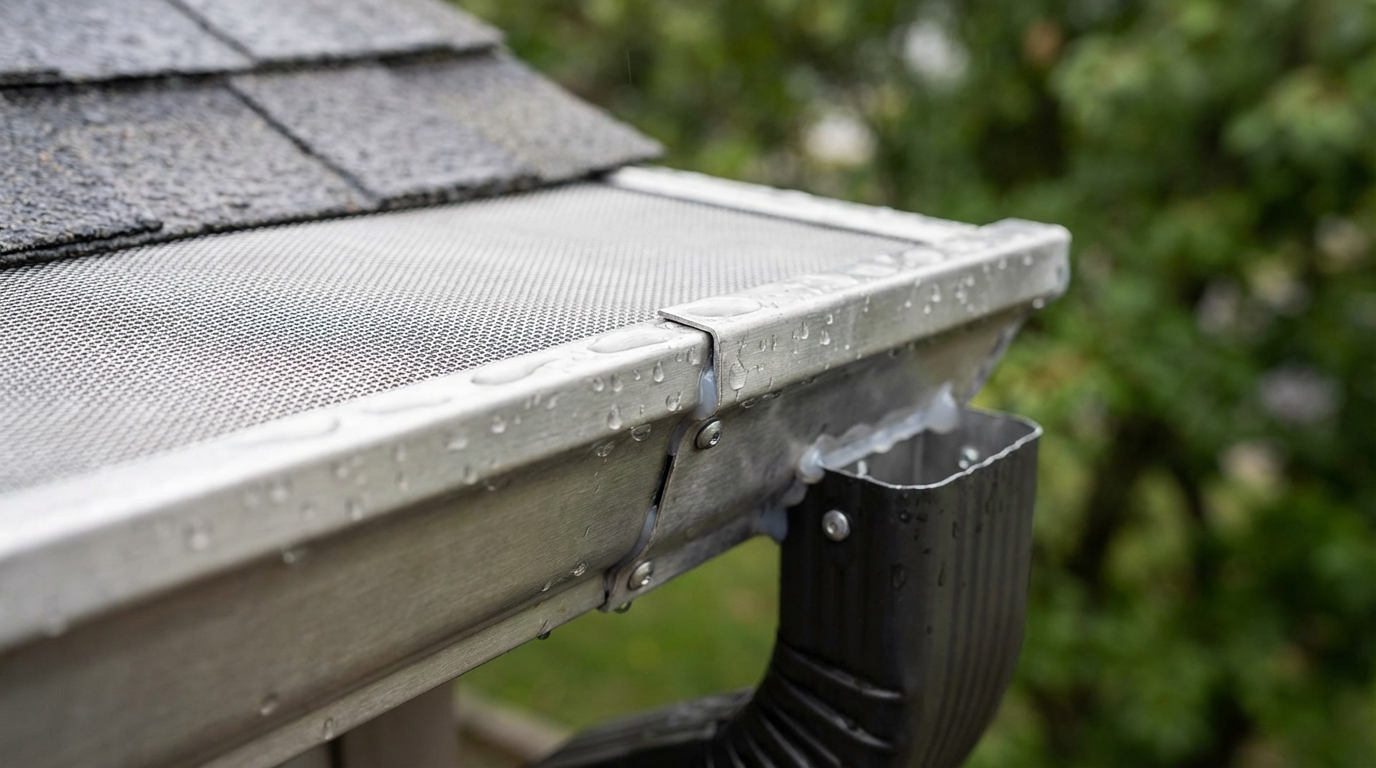
Georgia’s trees are beautiful, but they make gutter maintenance a real factor in system selection. Pine needles, leaves, twigs, and roof grit can clog gutters and downspouts quickly—especially in fall and after storms. Gutter guards can reduce debris buildup, but not all guards perform the same, and none eliminate maintenance entirely.
The right guard depends on your debris type. Fine mesh guards can be effective for small debris and pine needles, but they can also collect roof grit and require periodic brushing or rinsing. Surface-tension (helmet-style) covers can handle larger debris but may struggle in certain roof conditions or during very intense rain if not properly installed. Foam inserts are easy to install but can degrade and trap sediment over time, particularly in humid environments.
Maintenance remains essential because downspouts can still clog, and roof valleys can still wash grit into the system. A realistic goal is to reduce the frequency and severity of cleanouts, not to eliminate them forever. For many Georgia homeowners, a quality guard paired with an annual inspection is a practical balance.
Installation quality is the multiplier. Proper slope is critical—enough pitch to move water without creating visibly uneven lines. Hanger spacing should be appropriate for local conditions and gutter size; heavier 6-inch systems and high debris loads benefit from robust support. End caps, corners, and outlets should be sealed and fastened to withstand repeated wet-dry cycles and thermal expansion.
How to evaluate an installer (or your own plan)
- Ask how they size gutters based on roof area, pitch, and downspout placement—not just “standard practice.”
- Confirm downspout strategy: quantity, size, and where water will discharge.
- Inspect fascia condition: rotted wood won’t hold fasteners; repairs may be needed before installation.
- Review corner and seam approach: quality sealants and proper fabrication prevent early leaks.
- Discuss guard compatibility: some guards require specific mounting methods to avoid voiding roof warranties.
Practical seasonal maintenance plan for Georgia
A simple schedule can prevent most gutter-related issues. In late spring, check for storm damage, loose hangers, and early clogs from pollen and seed drop. In fall, remove leaves and inspect downspouts before the heavier winter rains. After any major storm, do a quick ground-level check for overflow stains, displaced extensions, or areas where water carved new channels in the soil.
If you’re uncomfortable with ladders, professional cleanings and inspections can be a cost-effective way to avoid expensive repairs later. Many problems—like minor slope issues, small leaks at corners, or partially blocked downspouts—are inexpensive to correct early but can become costly if ignored through a full rainy season.
Conclusion: A Georgia-Ready Gutter System Is Designed, Not Assumed
Choosing the right gutter system for Georgia’s rainfall comes down to building capacity, reliability, and a clear plan for where the water goes next. Heavy downpours expose weak links quickly—undersized gutters, too few downspouts, poor slope, leaky corners, and discharge that dumps water right at the foundation. The best-performing systems are the ones that match your roof’s runoff realities and your property’s drainage needs.
Key takeaways: prioritize correct sizing (often 6-inch gutters and appropriately sized downspouts for larger or steeper roofs), choose a style that balances capacity and aesthetics (K-style is a common high-capacity choice), select durable materials suited to humidity (aluminum is a strong all-around option), and treat downspout discharge as a foundation-protection strategy—not an afterthought. If you add gutter guards, choose them based on your debris type and keep a realistic maintenance plan in place.
When your gutters are designed for Georgia weather, you’ll notice the difference immediately: fewer overflows, less erosion, drier crawlspaces and basements, and a roofline that stays cleaner and more resilient year after year. If you’ve been dealing with recurring overflow or water damage, consider it an opportunity to upgrade with intention—because in Georgia, the next heavy rain is never that far away.