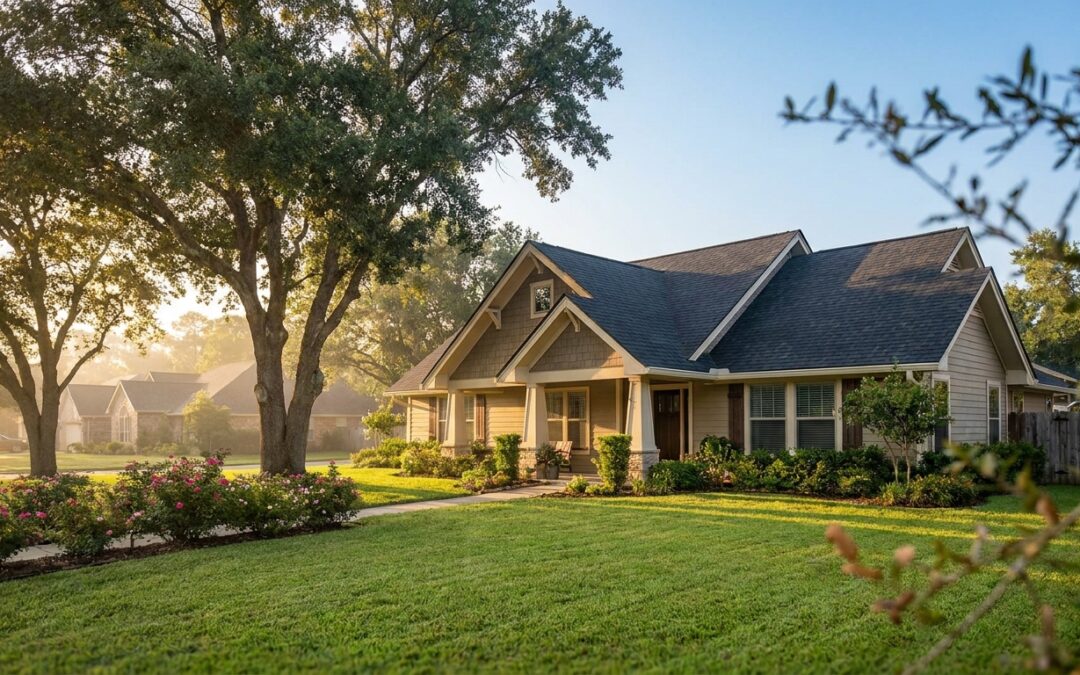
Georgia roofs work hard. Between humid summers, intense UV exposure, sudden hailstorms, and the occasional tropical system pushing inland, your roof isn’t just a “cover”—it’s a constantly tested system. Homeowners often ask, “How long should my roof last here?” The honest answer is: it depends on the material, installation quality, ventilation, maintenance, and the microclimate around your home. Still, you can make a very accurate estimate when you understand what shortens (or extends) roof life in Georgia.
This guide breaks down realistic roof lifespan expectations across the state, explains why Georgia’s climate matters so much, and shows you how to assess whether you’re looking at routine maintenance, a repair, or a full replacement. You’ll also get practical tips, real-world examples, and actionable steps to help you plan—before a small issue becomes an expensive emergency.
Georgia’s Climate: The Biggest Factor in Roof Lifespan
Georgia sits in a region where heat and moisture often team up. In much of the state, summer temperatures regularly climb into the 90s with high humidity. That combination accelerates the aging of roofing materials—especially asphalt shingles—by softening and drying out the asphalt binder over time. When shingles lose flexibility, they’re more likely to crack, curl, or shed granules.
Moisture is the other major player. Frequent rain, morning dew, and shaded roof sections create an environment where algae, moss, and mildew can thrive. Algae streaks may start as a cosmetic issue, but persistent moisture and organic growth can contribute to premature wear, especially in valleys and on north-facing slopes that dry more slowly.
Storm activity also matters. Georgia homeowners may experience wind-driven rain, thunderstorm gusts, hail in certain areas, and occasional hurricane remnants. Even when a roof doesn’t leak immediately after a storm, wind can loosen shingles, lift edges, and compromise seals. Over time, those small failures allow water intrusion and speed up the roof’s decline.
Regional Differences Across Georgia
Roof life can vary depending on where you live. Metro Atlanta often sees heavy rain events, tree cover, and humidity that encourage algae growth. North Georgia can bring more temperature swings and occasional ice events that stress flashing and underlayment. South Georgia and coastal regions deal with higher UV exposure, salt air (near the coast), and stronger storm systems—factors that can shorten the life of metal fasteners, flashing, and exposed components.
Even within the same city, your roof’s lifespan can differ based on shade, roof pitch, attic ventilation, and how quickly the roof dries after rain. A home surrounded by mature trees may have more debris buildup and longer drying times, while a home in an open area may experience more wind exposure and uplift risk.
Why “Manufacturer Warranty” Isn’t the Same as “Real Life”
Many roofing products advertise 25-, 30-, or even 50-year warranties. In Georgia, those numbers can be misleading if you treat them as a guaranteed service life. Warranties often have conditions: proper installation, adequate ventilation, and specific maintenance requirements. They also may be prorated after a certain number of years, meaning the coverage value declines over time.
A more useful approach is to think in terms of “expected service life” in Georgia. That’s the timeframe a properly installed roof typically performs well before age-related problems become common. With good maintenance and ventilation, you can often push beyond the average—but it’s wise to plan around realistic ranges.
Average Roof Lifespan in Georgia by Roofing Material
The material on your roof is the starting point for estimating lifespan. Two homes built in the same year in the same neighborhood may have very different replacement timelines if one has basic 3-tab shingles and the other has standing seam metal. Below are realistic Georgia-focused ranges, assuming proper installation and average maintenance.
Asphalt Shingles (Most Common in Georgia)
3-tab shingles: Approximately 12–18 years in many Georgia conditions. While some may last longer, 3-tab shingles are thinner and more vulnerable to heat and wind. If your home has older 3-tab shingles, you may notice granule loss, curling edges, or wind damage sooner than expected.
Architectural (dimensional) shingles: Approximately 18–25 years in Georgia, sometimes longer with excellent ventilation and maintenance. Architectural shingles are thicker and typically handle wind and heat better. They’re also more forgiving aesthetically if minor repairs are needed.
Premium asphalt shingles: Approximately 22–30 years, depending on product quality and roof design. These often include enhanced impact resistance or algae-resistant technology. In storm-prone areas or neighborhoods with heavy tree cover, upgrading to premium shingles can improve durability and reduce cosmetic staining.
Metal Roofing
Standing seam metal: Approximately 40–60+ years when properly installed. Standing seam systems conceal fasteners, reducing leak points and extending life. In Georgia’s heat, metal reflects solar radiation and can reduce attic heat load, especially when paired with a proper underlayment and ventilation strategy.
Exposed-fastener metal panels: Approximately 25–40 years. These roofs can perform well, but fasteners and washers may need periodic replacement as they age and as thermal expansion/contraction occurs. In humid climates, keeping an eye on fastener integrity is key.
Metal roofs can be an excellent long-term investment in Georgia, but they’re not “set it and forget it.” Coatings, sealants, flashing transitions, and fasteners (if exposed) require inspection. When maintained, metal often outlasts multiple asphalt roof cycles.
Tile, Slate, and Specialty Systems
Concrete or clay tile: Approximately 40–75 years, sometimes more. The tiles themselves can last a very long time, but underlayment and flashing may need replacement earlier. In Georgia, ensuring proper underlayment selection and installation is crucial due to heavy rain events.
Slate: Approximately 60–100+ years. Slate is exceptionally durable, but it requires specialized installation and repair expertise. The roof structure must also be able to support the weight. For homeowners planning to stay long-term, slate can be a “lifetime” roof when maintained.
Wood shakes/shingles: Often 20–30 years in ideal conditions, but Georgia humidity can reduce lifespan without diligent maintenance. Wood roofs are more vulnerable to moisture-related decay and require regular cleaning and treatment. Fire ratings and local code considerations also apply.
Flat and Low-Slope Roofing (Common on Additions and Commercial)
Modified bitumen: Approximately 15–25 years. These systems can be durable but are sensitive to installation details and drainage. Ponding water is the enemy of low-slope roofs, and Georgia’s heavy rain makes proper slope-to-drain essential.
TPO/PVC single-ply: Approximately 20–30 years depending on thickness, installation quality, and exposure. These membranes can be excellent in heat, but seams, penetrations, and mechanical damage must be monitored.
EPDM (rubber): Approximately 20–30 years. EPDM handles temperature swings well; however, punctures, flashing details, and seam integrity require periodic inspection—especially after storms or rooftop foot traffic.
What Shortens a Roof’s Life in Georgia (and How to Prevent It)
If you want a more accurate estimate than a generic lifespan chart, focus on the conditions that most commonly shorten roof life in Georgia. Many premature replacements aren’t caused by “old age” alone—they’re caused by heat stress, moisture, and ventilation issues that could have been addressed earlier.
Heat, UV Exposure, and Thermal Cycling
Georgia sun can be relentless. UV radiation breaks down asphalt over time, and high temperatures accelerate chemical aging. On hot days, roofing materials expand; at night, they contract. This daily thermal cycling stresses fasteners, sealants, and shingle adhesive strips. Over years, it can lead to lifted edges, cracked sealant, and vulnerable flashing transitions.
Actionable tip: If you’re replacing a roof, ask about high-temperature-rated underlayment and shingles designed for enhanced UV resistance. Also consider lighter shingle colors or “cool roof” options where appropriate to reduce heat absorption.
Real example: Two identical homes with architectural shingles can age differently if one has dark shingles and poor attic ventilation. The poorly ventilated attic traps heat, baking the shingles from below. That roof may show granule loss and curling years earlier than the better-ventilated home next door.
Humidity, Algae, Moss, and Debris Buildup
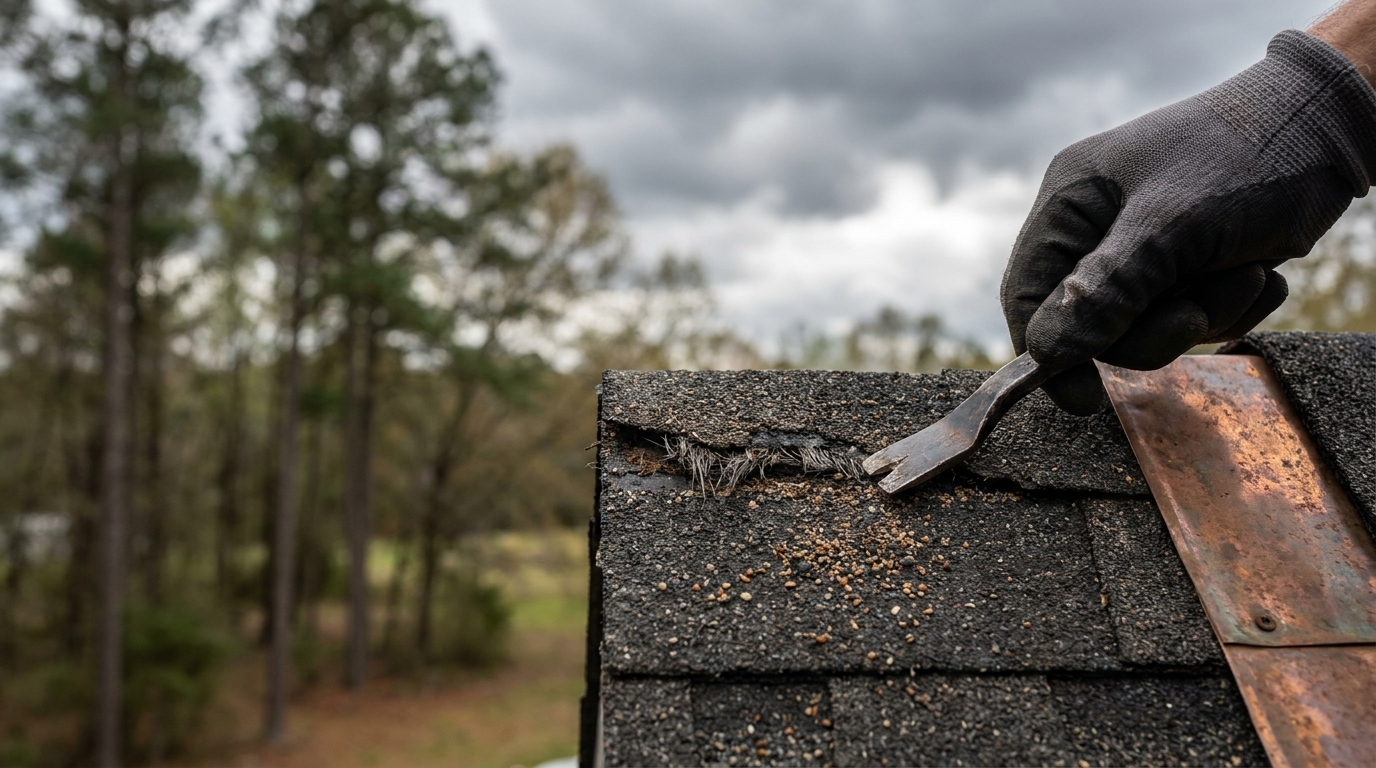
Black streaks on shingles are often algae (Gloeocapsa magma). While primarily cosmetic, algae thrives in humid, shaded environments and can hold moisture on the roof surface. Moss is more damaging; it can lift shingle edges and trap water, increasing the risk of deterioration and leaks.
Leaves and pine needles commonly collect in valleys, behind chimneys, and in gutter lines. That debris slows drainage and keeps roof surfaces wet longer. Over time, constant moisture increases wear on shingle edges and can compromise underlayment if water backs up.
Actionable tip: Keep valleys clear and gutters flowing. If algae is a recurring issue, consider algae-resistant shingles (often labeled AR) during replacement, and trim back overhanging branches to improve sunlight and drying.
Storm Damage: Wind, Hail, and Wind-Driven Rain
Wind damage isn’t always dramatic. A gust can break the seal on a few shingles, allowing them to lift repeatedly in future storms. That repeated lifting increases the chance of nail pull-through and water intrusion. Wind-driven rain can also exploit small flashing gaps around chimneys, vents, and skylights.
Hail can bruise shingles, knocking granules loose and creating weak spots that later crack. In some cases, hail damage is not visible from the ground and requires a professional inspection to identify soft spots, impact marks, and compromised matting.
Actionable tip: After major storms, schedule an inspection even if you don’t see leaks. Catching lifted shingles or compromised flashing early can prevent a small repair from turning into interior water damage and mold remediation.
Poor Ventilation and Insulation (The Hidden Roof Killers)
One of the most common reasons roofs fail early in Georgia is inadequate attic ventilation. Without balanced intake (soffit) and exhaust (ridge or roof vents), heat and moisture build up in the attic. That can warp decking, accelerate shingle aging, and contribute to condensation issues that look like “mystery leaks.”
In winter, poor ventilation can also trap moisture from household activities (showers, cooking, laundry). Even in Georgia’s milder winters, condensation can form on the underside of roof decking, leading to wood rot and reduced structural integrity over time.
Actionable tip: If you’re seeing rusted nail tips, damp insulation, or a musty attic smell, have a roofer evaluate ventilation and bathroom exhaust routing. Ventilation upgrades can extend roof life and improve energy efficiency.
Warning Signs Your Roof Is Near the End of Its Life
Many Georgia homeowners wait for an active leak before taking action. The problem is that by the time water shows up on a ceiling, it may have already traveled through insulation, along framing, and into hidden areas. Knowing early warning signs helps you plan a replacement on your timeline—not during an emergency.
Exterior Signs You Can Spot from the Ground
Look for widespread granule loss (often visible as “bald” shingles or excessive granules in gutters), curling or cupping shingle edges, and uneven roof lines that may indicate decking issues. Missing shingles, lifted tabs, or exposed nail heads are also red flags—especially after storms.
Pay attention to flashing areas: chimneys, sidewalls, roof-to-wall transitions, and vent penetrations. Rust stains, gaps, or bent flashing can be early indicators of water entry points. In Georgia’s heavy rains, flashing failures can cause leaks even when shingles still look decent.
Real example: A homeowner in Metro Atlanta notices small granules collecting at downspout exits after each storm. The roof isn’t leaking yet, but that consistent granule loss suggests accelerated aging. Addressing it early could mean targeted repairs or planning a replacement before the next severe weather season.
Interior Clues That Often Point to Roofing Problems
Water stains on ceilings or walls are obvious, but subtler signs matter too: peeling paint near rooflines, bubbling drywall, or damp spots in attic insulation. If you see daylight through roof boards in the attic, that’s an urgent issue.
Also note odors. A musty smell in the attic can indicate trapped moisture, mold growth, or slow leaks. In Georgia’s humid environment, moisture problems can spread quickly, so investigating early is critical.
Actionable tip: Check your attic after heavy rain with a flashlight. Look for damp wood, dark staining, or wet insulation around penetrations and valleys. If you’re uncomfortable walking in the attic, schedule a professional inspection.
How Age and Repair History Should Influence Your Decision
A roof’s calendar age is only part of the story. A 12-year-old roof with repeated storm repairs, poor ventilation, and ongoing algae issues may be closer to replacement than a well-maintained 18-year-old roof with solid ventilation and minimal storm exposure.
If you’re repeatedly repairing the same area—like a troublesome valley or chimney flashing—it may indicate a design or installation issue that repairs can’t fully solve. At a certain point, replacement becomes more cost-effective than ongoing patchwork.
Actionable tip: Track repairs and inspection notes. When repair costs start approaching a meaningful percentage of replacement cost (many homeowners use 25–35% as a planning threshold), it’s time to get a replacement estimate and compare long-term value.
How to Make Your Roof Last Longer in Georgia
While you can’t change the weather, you can absolutely influence how long your roof lasts. The biggest gains come from keeping water moving off the roof, keeping heat and moisture balanced in the attic, and addressing small issues before they spread.
Maintenance Checklist: What to Do and How Often
Plan on a professional inspection at least once per year and after major storms. Many reputable roofers offer maintenance programs or low-cost inspections that identify minor issues early—like lifted shingles, failing sealant, or flashing gaps.
- Twice per year: Clean gutters and downspouts; clear roof valleys of debris.
- After storms: Look for missing shingles, dented vents, or displaced flashing.
- Annually: Schedule a roof inspection; check attic for moisture and ventilation issues.
- As needed: Trim branches that overhang the roof to reduce debris and abrasion.
Real example: A homeowner in a tree-heavy neighborhood schedules spring and fall gutter cleanings and keeps valleys clear. That simple routine prevents water backup at the eaves and reduces the chance of premature edge deterioration—often adding years of reliable performance.
Ventilation and Insulation Upgrades That Pay Off
Balanced attic ventilation is one of the best “roof life extenders” in Georgia. Proper intake and exhaust reduce attic temperatures, which reduces heat stress on shingles and helps prevent moisture buildup. If your attic is under-ventilated, a roofer can evaluate whether adding soffit vents, ridge vents, or additional exhaust vents makes sense.
Insulation also matters. When insulation is inadequate or uneven, your attic can experience temperature extremes and condensation issues. Sealing air leaks from living spaces (around light fixtures, attic hatches, and duct penetrations) reduces the moisture load entering the attic.
Actionable tip: Ask your roofer to assess ventilation ratios during an inspection. If you’re replacing the roof, it’s an ideal time to correct ventilation and ensure the new system performs to its full potential.
Choosing Better Materials for Georgia Conditions
If you’re planning a replacement, selecting materials suited for Georgia’s climate can improve lifespan and reduce maintenance. For asphalt roofs, consider architectural or premium shingles with algae resistance and higher wind ratings. In hail-prone areas, impact-resistant shingles may reduce damage and could potentially qualify for insurance discounts (check with your insurer).
Metal roofing is also a strong choice for long-term durability, especially standing seam systems. While the upfront cost is higher, the longer service life and reduced replacement frequency can make it cost-effective over decades.
Actionable tip: When comparing quotes, don’t just compare shingle brand and color. Compare the full system: underlayment, ice-and-water shield placement (especially in valleys and penetrations), flashing details, ventilation plan, and workmanship warranty.
Planning for Repair vs. Replacement: Costs, Timing, and Smart Decisions
Knowing how long a roof lasts is useful, but planning is where homeowners save money and stress. In Georgia, timing matters because storm seasons and contractor availability can affect both scheduling and pricing. A proactive plan lets you replace under controlled conditions rather than in a rush after interior damage.
When a Repair Makes Sense
Repairs are often appropriate when the roof is relatively young, the damage is localized, and the underlying structure is sound. Examples include a few missing shingles after a wind event, a small flashing issue around a vent pipe, or minor sealant failure at a transition.
However, repairs should come with a clear diagnosis. If a roofer can’t explain why the issue happened—or if the same leak returns—there may be a deeper problem such as improper flashing design, inadequate slope, or ventilation-related condensation.
Actionable tip: Ask for photos and a written scope of work. A professional contractor should be able to show you the exact failure point and explain the repair approach in plain language.
When Replacement Is the Wiser Investment
Replacement becomes the better option when the roof is near the end of its expected service life, when damage is widespread, or when multiple components are failing at once (shingles, flashing, underlayment, and decking). If you’re seeing recurring leaks, significant granule loss, or widespread shingle deformation, replacement may prevent ongoing interior repairs.
Another common replacement trigger is a major storm event that causes broad damage. In those cases, insurance may cover a portion of the work depending on your policy and the type of damage documented. A professional inspection and thorough documentation can be essential.
Real example: A 22-year-old architectural shingle roof in central Georgia has several repaired areas, persistent algae staining, and multiple lifted shingles after a windstorm. Even if repairs could stop immediate leaks, the roof is at an age where system-wide aging is expected. Replacing now can prevent repeated service calls and reduce the risk of decking rot.
Best Time of Year to Replace a Roof in Georgia
Roofing can be done year-round in Georgia, but spring and fall are often ideal due to milder temperatures and generally more predictable weather. Summer replacements are common too, though extreme heat can make installation more physically demanding and may affect scheduling. Winter is typically workable, but cold snaps and rain can cause delays.
From a planning standpoint, replacing before peak storm seasons can reduce the risk of emergency leaks. If your roof is approaching the end of its lifespan, consider scheduling an inspection in late winter or early spring to assess whether replacement should be planned before summer storms intensify.
Actionable tip: If you’re selling your home, a roof nearing the end of its life can affect negotiations. A pre-listing roof inspection and a clear plan—repair, certification (where available), or replacement—can protect your sale price and reduce last-minute surprises.
Questions to Ask a Georgia Roofing Contractor
Because installation quality is a major determinant of roof lifespan, choosing the right contractor is as important as choosing the right material. A well-installed roof in Georgia can outperform a poorly installed “premium” system.
- What is the expected service life of this system in Georgia, and why?
- How will you handle ventilation (intake and exhaust) to reduce heat and moisture?
- What underlayment and leak barriers are included, especially in valleys and around penetrations?
- How will flashing be replaced or upgraded (chimneys, sidewalls, step flashing)?
- What workmanship warranty do you provide, and what does it cover?
Actionable tip: Be cautious of quotes that are significantly lower than others without a clear explanation. In many cases, the difference is in underlayment quality, flashing scope, ventilation corrections, or cleanup and disposal practices—items that directly impact lifespan.
Conclusion: Realistic Roof Lifespan Expectations for Georgia Homeowners
So, how long does a roof approximately last in Georgia? For most homes with asphalt shingles, a realistic expectation is often 15–25 years depending on shingle type, ventilation, storm exposure, and maintenance. Metal roofs frequently last 40–60+ years, while tile and slate can last even longer—though underlayment and flashing may need attention earlier. The key is to treat roof life as a range influenced by your home’s specific conditions, not a single number printed on a package.
The best way to maximize roof lifespan in Georgia is to focus on the fundamentals: keep water draining properly, keep the attic ventilated and dry, address storm damage quickly, and choose materials and installation methods designed for heat and humidity. Small steps—like cleaning gutters, clearing valleys, trimming branches, and scheduling annual inspections—can add meaningful years to your roof’s service life.
Key takeaways: (1) Georgia’s heat and humidity accelerate aging, especially for asphalt; (2) ventilation and installation quality are major lifespan multipliers; (3) storm damage can be subtle, so post-storm inspections matter; and (4) proactive planning beats emergency replacement every time. If you’re unsure where your roof stands today, schedule a professional inspection and use the findings to build a clear repair-or-replace plan that fits your budget and timeline.